Sunday, May 26, 2013
#imNOSome - NOS - Case Study # 7
This case study was about NOS trying to maintain their image for 2013. They held a social networking contest through twitter and instagram with the help of CrushIQ, by telling followers to upload pictures of themselves with the product and the hashtag #imNOSome. If a person won, they would receive racing related prizes that were developed around driver Ricky Stenhouse, Jr. who was involved with NOS's partnership with Roush Fenway Racing, This campaign also had a video to go along with it that went viral during the campaign making it the most watched video that NOS has put out. In the end, this campaign was successful and increased followers from 1,997 to 7,669 and increased another 2,000 in the two days following the campaign.
If you would like to see more of this case study you can check it out here

Sunday, May 19, 2013
Kissy Face! Watt Energy - Case Study # 6
This short video clip was about the Hungarian energy drink known as Watt Energy. They used a promotion that was driven by social media. They decided to hold contests with people making kissy faces in pictures. People could upload their photos to their site and enter for a chance to win crazy prizes. In the end it proved to be successful.
Even More Labels
So I had a tiny burst of motivation this evening and I managed to get all of the labels done with the exception of an official description for each sin. Here they are!

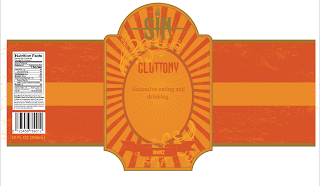


I changed the color of the logo to make it stand out more but I feel like it could use a little more tweaking.
Saturday, May 18, 2013
Still thinking...
So, I've been thinking about my labels and how I need to shorten the description on each one. I'm thinking that maybe I could use the basic dictionary definition rather than describing each sin in full detail. If this doesn't suffice, then I will need to come up with something better. Well, here are the dictionary definitions.
Envy - A feeling of discontent or covetousness with regard to another's advantages, success, possessions, etc.
Wrath - Strong, stern, or fierce anger, deeply resentful indignation; ire.
Pride - A high or inordinate opinion of one's own dignity, importance, merit, or superiority, whether as cherished in the mind or as displayed in bearing, conduct, etc.
Greed - Excessive or rapacious desire, especially for wealth or possessions.
Lust - A passionate or overmastering desire or craving.
Gluttony - Excessive eating or drinking.
Sloth - Habitual disinclination to exertion; indolence; laziness.
Again, I'm not 100 percent that I will use these definitions on my labels, I jsut need to think of something cleaver that describes each sin.
Envy - A feeling of discontent or covetousness with regard to another's advantages, success, possessions, etc.
Wrath - Strong, stern, or fierce anger, deeply resentful indignation; ire.
Pride - A high or inordinate opinion of one's own dignity, importance, merit, or superiority, whether as cherished in the mind or as displayed in bearing, conduct, etc.
Greed - Excessive or rapacious desire, especially for wealth or possessions.
Lust - A passionate or overmastering desire or craving.
Gluttony - Excessive eating or drinking.
Sloth - Habitual disinclination to exertion; indolence; laziness.
Again, I'm not 100 percent that I will use these definitions on my labels, I jsut need to think of something cleaver that describes each sin.
Monday, May 13, 2013
The Sins Defined
After speaking with my instructor, we have come to the conclusion of a few different things regarding the labels. He has advised that I do something to make the logo pop a little better, make the name of the sin a little bigger, and to make the description of the sins a little more concise and in a smaller point size for the font. Since I know these things, I figured I could get the ball rolling by shortening the definitions of the sins. In fact, I don't think I even shared the definitions of them with you guys yet. So without further adieu, here they are.
Lust - Lust or lechery (carnal "luxuria") is an intense desire. It is usually thought of as excessive sexual wants; however, the word was originally a general term for desire. Therefore lust could involve the intense desire of money, fame, or power as well.
In Dante's Purgatorio, the penitent walks within flames to purge himself of lustful/sexual thoughts and feelings. In Dante's Inferno, unforgiven souls of the sin of lust are blown about in restless hurricane-like winds symbolic of their own lack of self-control to their lustful passions in earthly life.
Gluttony - Derived from the Latin gluttire, meaning to gulp down or swallow, gluttony (Latin, gula) is the over-indulgence and over-consumption of anything to the point of waste.
In Christian religions, it is considered a sin because of the excessive desire for food, and its withholding from the needy.
Because of these scripts, gluttony can be interpreted as selfishness; essentially placing concern with one's own interests above the well-being or interests of others.
Greed - Greed (Latin, avaritia), also known as avarice or covetousness, is, like lust and gluttony, a sin of excess. However, greed (as seen by the church) is applied to a very excessive or rapacious desire and pursuit of material possessions. Thomas Aquinas wrote, "Greed is a sin against God, just as all mortal sins, in as much as man condemns things eternal for the sake of temporal things." In Dante's Purgatory, the penitents were bound and laid face down on the ground for having concentrated too much on earthly thoughts. Scavenging and hoarding of materials or objects, theft and robbery, especially by means of violence, trickery, or manipulation of authority are all actions that may be inspired by greed. Such misdeeds can include simony, where one attempts to purchase or sell sacraments, including Holy Orders and, therefore, positions of authority in the Church hierarchy.
As defined outside of Christian writings, greed is an inordinate desire to acquire or possess more than one needs, especially with respect to material wealth.
Sloth - Sloth (Latin, Socordia) can entail different vices. While sloth is sometimes defined as physical laziness, spiritual laziness is emphasized. Failing to develop spiritually is key to becoming guilty of sloth. In the Christian faith, sloth rejects grace and God.
Sloth has also been defined as a failure to do things that one should do. By this definition, evil exists when good men fail to act.
Over time, the "acedia" in Pope Gregory's order has come to be closer in meaning to sloth. The focus came to be on the consequences of acedia rather than the cause, and so, by the 17th century, the exact deadly sin referred to was believed to be the failure to utilize one's talents and gifts. Even in Dante's time there were signs of this change; in his Purgatorio he had portrayed the penance for acedia as running continuously at top speed.
Wrath - Wrath (Latin, ira), also known as "rage", may be described as inordinate and uncontrolled feelings of hatred and anger. Wrath, in its purest form, presents with self-destructiveness, violence, and hate that may provoke feuds that can go on for centuries. Wrath may persist long after the person who did another a grievous wrong is dead. Feelings of anger can manifest in different ways, including impatience, revenge, and vigilantism.
Wrath is the only sin not necessarily associated with selfishness or self-interest, although one can of course be wrathful for selfish reasons, such as jealousy (closely related to the sin of envy). Dante described vengeance as "love of justice perverted to revenge and spite". In its original form, the sin of anger also encompassed anger pointed internally as well as externally. Thus suicide was deemed as the ultimate, albeit tragic, expression of hatred directed inwardly, a final rejection of God's gifts.
Envy - Like greed and lust, Envy (Latin, invidia) is characterized by an insatiable desire. Envy is similar to jealousy in that they both feel discontent towards someone's traits, status, abilities, or rewards. The difference is the envious also desire the entity and covet it.
Envy can be directly related to the Ten Commandments, specifically, "Neither shall you desire... anything that belongs to your neighbour." Dante defined this as "a desire to deprive other men of theirs". In Dante's Purgatory, the punishment for the envious is to have their eyes sewn shut with wire because they have gained sinful pleasure from seeing others brought low. Aquinas described envy as "sorrow for another's good".
Pride - In almost every list, pride (Latin, superbia), or hubris (Greek), is considered the original and most serious of the seven deadly sins, and the source of the others. It is identified as a desire to be more important or attractive than others, failing to acknowledge the good work of others, and excessive love of self (especially holding self out of proper position toward God). Dante's definition was "love of self perverted to hatred and contempt for one's neighbour". In Jacob Bidermann's medieval miracle play, Cenodoxus, pride is the deadliest of all the sins and leads directly to the damnation of the titulary famed Parisian doctor. In perhaps the best-known example, the story of Lucifer, pride (his desire to compete with God) was what caused his fall from Heaven, and his resultant transformation into Satan. In Dante's Divine Comedy, the penitents were forced to walk with stone slabs bearing down on their backs to induce feelings of humility.
*This post will be edited to include my definitions
Lust - Lust or lechery (carnal "luxuria") is an intense desire. It is usually thought of as excessive sexual wants; however, the word was originally a general term for desire. Therefore lust could involve the intense desire of money, fame, or power as well.
In Dante's Purgatorio, the penitent walks within flames to purge himself of lustful/sexual thoughts and feelings. In Dante's Inferno, unforgiven souls of the sin of lust are blown about in restless hurricane-like winds symbolic of their own lack of self-control to their lustful passions in earthly life.
Gluttony - Derived from the Latin gluttire, meaning to gulp down or swallow, gluttony (Latin, gula) is the over-indulgence and over-consumption of anything to the point of waste.
In Christian religions, it is considered a sin because of the excessive desire for food, and its withholding from the needy.
Because of these scripts, gluttony can be interpreted as selfishness; essentially placing concern with one's own interests above the well-being or interests of others.
Greed - Greed (Latin, avaritia), also known as avarice or covetousness, is, like lust and gluttony, a sin of excess. However, greed (as seen by the church) is applied to a very excessive or rapacious desire and pursuit of material possessions. Thomas Aquinas wrote, "Greed is a sin against God, just as all mortal sins, in as much as man condemns things eternal for the sake of temporal things." In Dante's Purgatory, the penitents were bound and laid face down on the ground for having concentrated too much on earthly thoughts. Scavenging and hoarding of materials or objects, theft and robbery, especially by means of violence, trickery, or manipulation of authority are all actions that may be inspired by greed. Such misdeeds can include simony, where one attempts to purchase or sell sacraments, including Holy Orders and, therefore, positions of authority in the Church hierarchy.
As defined outside of Christian writings, greed is an inordinate desire to acquire or possess more than one needs, especially with respect to material wealth.
Sloth - Sloth (Latin, Socordia) can entail different vices. While sloth is sometimes defined as physical laziness, spiritual laziness is emphasized. Failing to develop spiritually is key to becoming guilty of sloth. In the Christian faith, sloth rejects grace and God.
Sloth has also been defined as a failure to do things that one should do. By this definition, evil exists when good men fail to act.
Over time, the "acedia" in Pope Gregory's order has come to be closer in meaning to sloth. The focus came to be on the consequences of acedia rather than the cause, and so, by the 17th century, the exact deadly sin referred to was believed to be the failure to utilize one's talents and gifts. Even in Dante's time there were signs of this change; in his Purgatorio he had portrayed the penance for acedia as running continuously at top speed.
Wrath - Wrath (Latin, ira), also known as "rage", may be described as inordinate and uncontrolled feelings of hatred and anger. Wrath, in its purest form, presents with self-destructiveness, violence, and hate that may provoke feuds that can go on for centuries. Wrath may persist long after the person who did another a grievous wrong is dead. Feelings of anger can manifest in different ways, including impatience, revenge, and vigilantism.
Wrath is the only sin not necessarily associated with selfishness or self-interest, although one can of course be wrathful for selfish reasons, such as jealousy (closely related to the sin of envy). Dante described vengeance as "love of justice perverted to revenge and spite". In its original form, the sin of anger also encompassed anger pointed internally as well as externally. Thus suicide was deemed as the ultimate, albeit tragic, expression of hatred directed inwardly, a final rejection of God's gifts.
Envy - Like greed and lust, Envy (Latin, invidia) is characterized by an insatiable desire. Envy is similar to jealousy in that they both feel discontent towards someone's traits, status, abilities, or rewards. The difference is the envious also desire the entity and covet it.
Envy can be directly related to the Ten Commandments, specifically, "Neither shall you desire... anything that belongs to your neighbour." Dante defined this as "a desire to deprive other men of theirs". In Dante's Purgatory, the punishment for the envious is to have their eyes sewn shut with wire because they have gained sinful pleasure from seeing others brought low. Aquinas described envy as "sorrow for another's good".
Pride - In almost every list, pride (Latin, superbia), or hubris (Greek), is considered the original and most serious of the seven deadly sins, and the source of the others. It is identified as a desire to be more important or attractive than others, failing to acknowledge the good work of others, and excessive love of self (especially holding self out of proper position toward God). Dante's definition was "love of self perverted to hatred and contempt for one's neighbour". In Jacob Bidermann's medieval miracle play, Cenodoxus, pride is the deadliest of all the sins and leads directly to the damnation of the titulary famed Parisian doctor. In perhaps the best-known example, the story of Lucifer, pride (his desire to compete with God) was what caused his fall from Heaven, and his resultant transformation into Satan. In Dante's Divine Comedy, the penitents were forced to walk with stone slabs bearing down on their backs to induce feelings of humility.
*This post will be edited to include my definitions
Sunday, May 12, 2013


Relentless - Case Study # 5
The above video is a case study of Relentless' marketing campaign They used a ripple effect approach to get the word out about their product as well as some social networking and events. This campaign proved successful.
Subscribe to:
Posts (Atom)